Beer has been quenching thirst and bringing people together for thousands of years. Its history is a long and storied one, full of twists and turns.
As our forebears left behind their nomadic ways and embraced a settled life, they discovered agriculture and the enchanting process of turning grains into a delicious, frothy brew. The ancient Sumerians didn’t just like beer; they absolutely adored it! They even worshipped Ninkasi, a goddess of beer, and inscribed the Hymn to Ninkasi, a recipe for beer, on clay tablets. Divine intervention, indeed!
As the art of beer-making spread across the globe, various cultures added their unique take on the beverage. For example, the Egyptians brewed zythum, a beer made from barley, malt, and water – perfect for satisfying that pyramid-building appetite. The Babylonians, under the rule of Hammurabi, even had laws regulating beer production and distribution. Meanwhile, the Vikings relished a potent brew called “Berserksgangr,” which roughly translates to “going berserk with beer.”
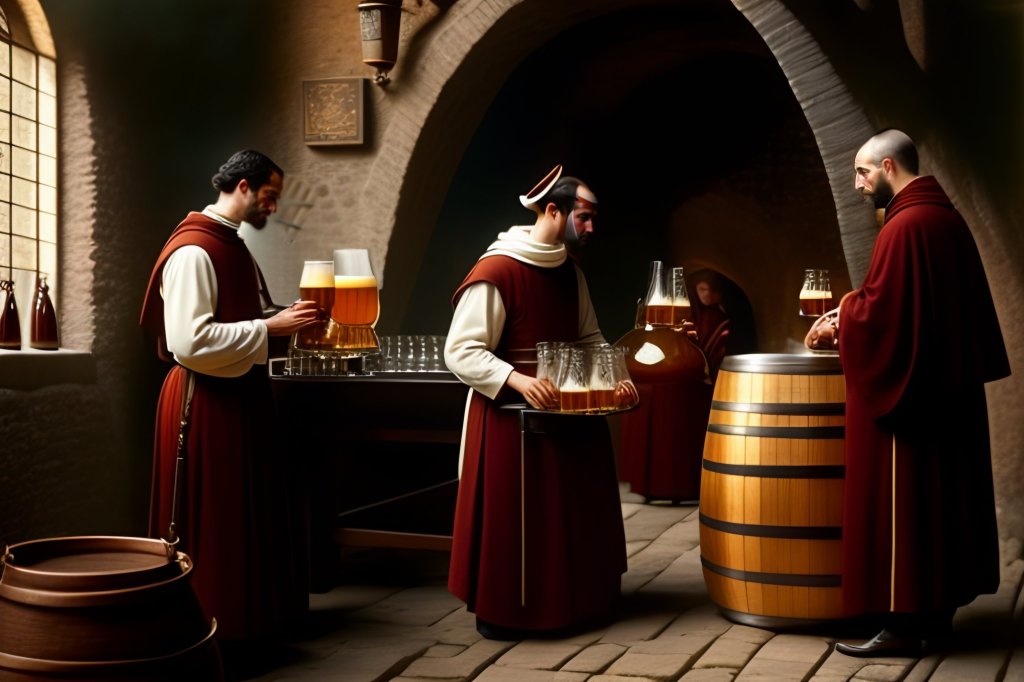
During the Middle Ages, monks seized the reins of beer-making, using it to sustain their monasteries and nourish local communities. They even pioneered new brewing techniques, such as using hops as a preservative and flavoring agent, a practice first documented by the German nun and brewer Hildegard of Bingen. Who would have guessed these devout men and women secretly brewed some of the world’s most cherished beers, like Belgian Trappist ales and German wheat beers?
The industrial revolution of the 18th and 19th centuries spurred remarkable advancements in beer production. With innovations like the steam engine, refrigeration, and the hydrometer, which was invented by Englishman John Richardson, brewers could now produce beer on a massive scale. This era also witnessed the rise of commercial breweries catering to ever-growing urban populations, like the Bass Brewery, which was once the largest brewery in the world.
In the 20th century, Prohibition in the United States forced breweries to shut down or switch to making other products. However, when the ban was lifted in 1933, the industry bounced back, and new brewing techniques, like pasteurization and canning, emerged.
Today, the global beer industry ranges from charming craft breweries to sprawling multinational conglomerates. The craft beer movement has flourished in recent years, emphasizing quality, creativity, and locally-sourced ingredients. These small-scale brewers have revitalized traditional beer styles and introduced groundbreaking new flavors to beer enthusiasts around the world. Non-alcoholic beers are also gaining traction among health-conscious individuals who seek the same great taste without the buzz.
So, the next time you crack open a cold one, raise your glass to the ancient Sumerians, the medieval monks, and all the beer lovers who’ve left their mark on this incredible beverage’s history. Cheers to the lively and fascinating tales of beer!
P.S. With my last name being “Beer,” I simply had to make this one of my first articles! I generated the image using Lexica Aperture. I hope you enjoy it as much as I enjoyed crafting this effervescent and entertaining post.
 Drinking World History